
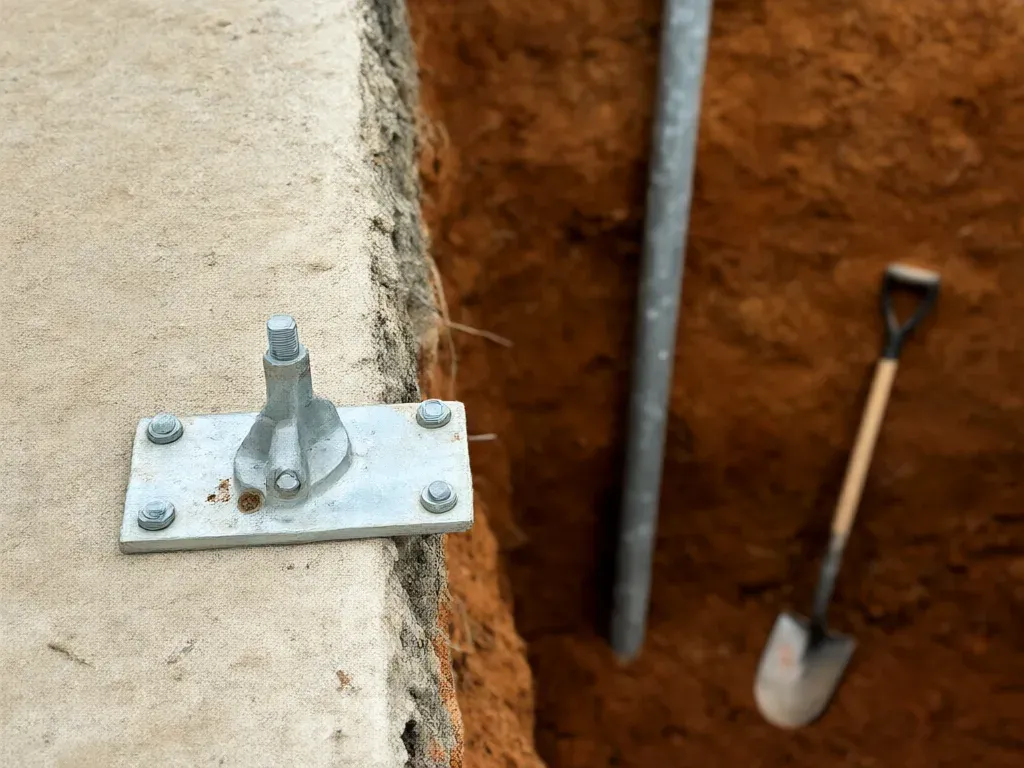
Foundation Piers in New Braunfels, TX
New Braunfels Superior Foundation Repair offers professional foundation piers in New Braunfels, TX with 23 years of installing pressed concrete pilings, drilled bell-bottom piers, steel push piers and helical piers. We pick the pier type from the soil, the load and the engineer's review, not from whatever happens to be on the truck. Piers go in 6 to 8 feet apart along the grade beam.
Concrete piering is the right call on most local slab homes. Steel and helical piers earn their higher price where clay runs deep, loads are light, or the engineer wants a proof load. Every foundation pier we install carries a lifetime warranty that transfers to the next owner at no charge.
Get a FREE Estimate
Or call (830) 221-9409
Foundation Pier Types We Install
Here's what each pier is, where it fits and what it costs. Your pier map will name the type for every location.
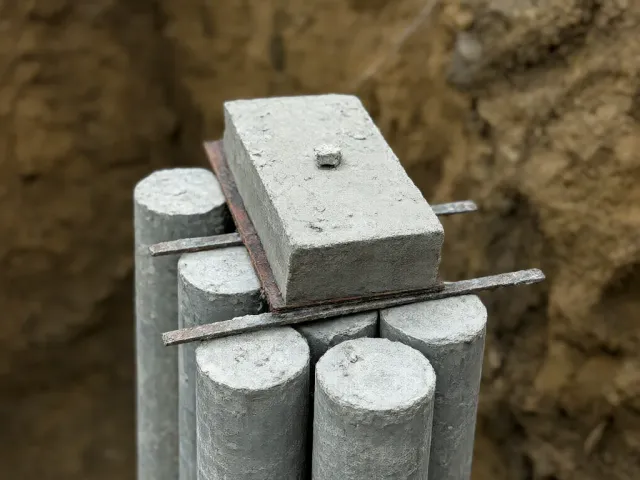
Pressed Concrete Pilings
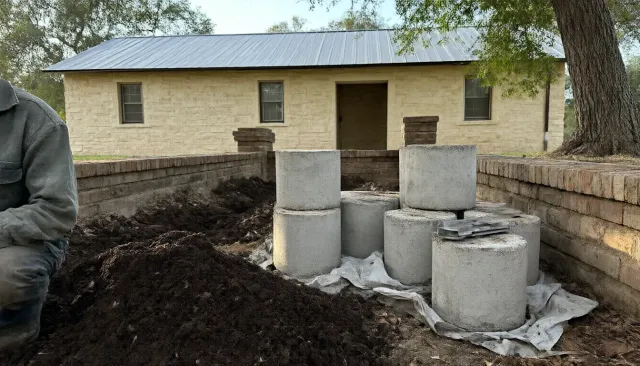
Precast concrete cylinders, 6 by 12 inches, stacked and pressed with a hydraulic ram until the stack stops moving. In deep clay they usually reach 10 to 18 feet. They're quick to install, suit most single-story and plenty of two-story slab homes, and run $375 to $475 a pier outside the house.
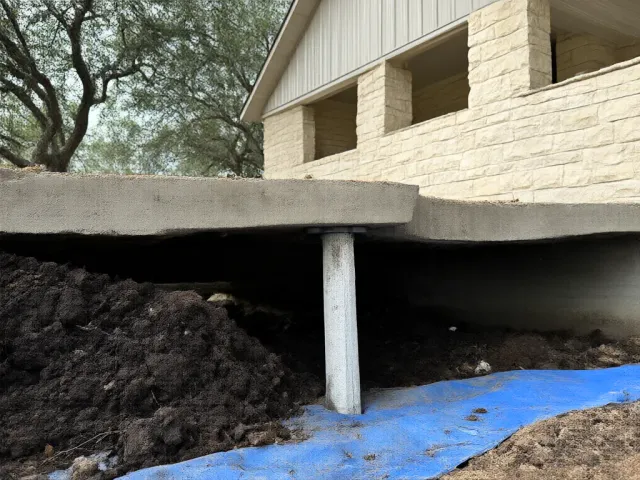
Drilled Bell-Bottom Concrete Piers
Poured in place in a 12-inch shaft drilled 10 to 12 feet deep or into rock, with the bottom belled out to 24 to 30 inches. A half-inch rebar cage and 3,000 PSI concrete go in, and the pier cures 7 days before the beam is set. They run $950 to $1,450 a pier and handle heavy point loads well.
Steel Push Piers
Sections of 2-7/8-inch galvanized steel tube driven with the weight of the structure until they reach load-bearing strata. Because the drive pressure is measured, every pier gets load-tested as it goes in. They run $1,350 to $2,100 a pier.
Helical Piers
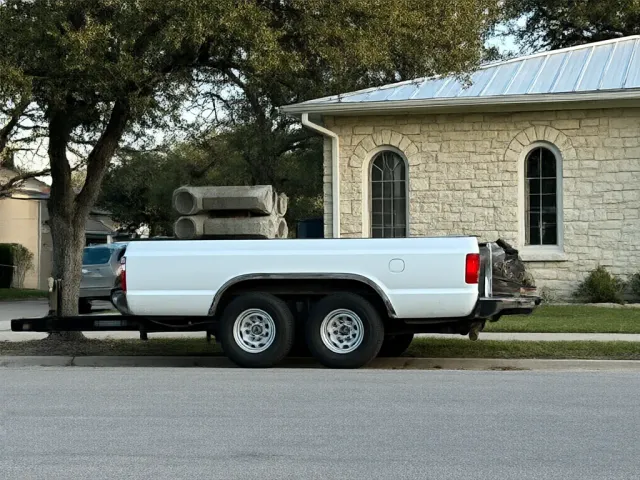
Steel shafts with helix plates welded on, screwed into the ground with a hydraulic drive head. The torque during the install tells us the load each pier can carry. They run $1,650 to $2,700 a pier and suit porches, additions and lighter structures that can't push a steel pier down.
Concrete Pier Pads for Pier and Beam Houses
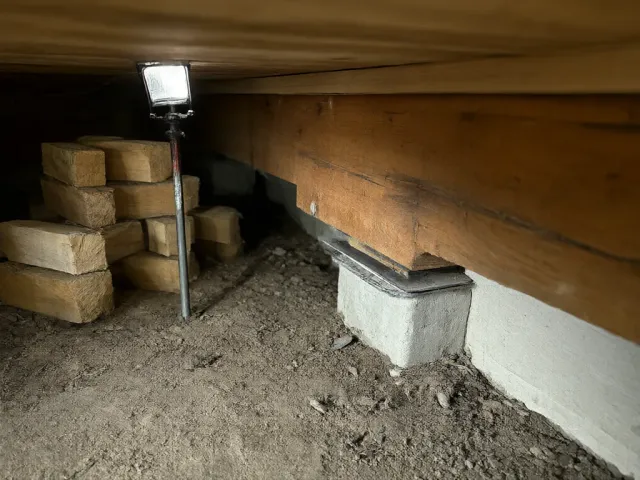
Under a pier and beam house, the support is a concrete pad on a compacted base with a steel shim stack under the girder. New pads replace rotted cedar stumps and cracked blocks for $350 to $600 each.
Interior Slab Piers
Any of the pier types above can go under the inside of a slab, through a breakout in the floor or a tunnel from outside. Interior pressed pilings run $650 to $950 each, backfill and patch included.
How We Choose a Foundation Pier
Three things decide it: what's under the house, how heavy the house is, and what the engineer wants to see. A single-story brick home on deep clay is a pressed piling job almost every time. A two-story stone house on the same clay may call for bell-bottom piers.
On shallow limestone, pressed pilings often stop at rock 1 to 3 feet down. That's solid bearing, and it makes the job quicker and cheaper than people expect. Where an engineer wants a proof load or the clay runs unusually deep, steel push piers take over.
We don't push one pier type on every job. If a company recommends steel on every house it looks at, ask why. Sometimes there's a good answer. Often it's the margin.
Foundation Pier Depth and Spacing
Pier depth isn't something we pick in advance. A pressed piling or steel pier goes down until it stops moving under the press, which is what refusal means. A fixed depth printed on an estimate is a guess.
Spacing comes from the beam and the load. We set piers 6 to 8 feet on center along the grade beam, tighter at corners and under heavy walls, and we log each pier's location, depth and pressure on the pier map you get at the end of the job.
Why Two Houses on One Street Get Different Depths
Soil changes faster than streets do, especially near the Balcones Escarpment. One lot can sit on deep Branyon clay and the next on fill over rock. The pilings find the difference for us, which is exactly why we press to refusal.
It's also why our estimates price pressed pilings per pier, not per foot of depth, so a deeper stop doesn't show up as a surprise on the invoice.
Pier Caps, Shims and Adjustments
What sits on top of a pier matters as much as what's under it. Every piling gets a concrete cap block and a stack of steel shims under the beam. Wood wedges crush and rot. Steel doesn't.
That stack is also what makes a pier adjustable. If a section of the house drifts years later, we dig back down to it, add or pull shims and reset the height without replacing the pier.
It's the same reason we can re-level piers another company set. If they were pressed to refusal and capped properly, they usually just need new shims, not new piers.
The Lifetime Foundation Pier Warranty
Every pier we install is covered for the life of the structure. If the section over one of our piers settles, we come back and adjust it at no charge, and the warranty transfers to the next owner at no charge when you sell.
The warranty covers the piers we set. Plumbing leaks aren't covered, and neither are sections we didn't pier or water problems we warned you about in writing. We've been in business since 2003, and how long a company has been around is the first part of any warranty worth checking.
Find Out Which Piers Your House Needs
Call (830) 221-9409 or send the form. We'll read your floors for free and show you a pier map with every pier priced.